
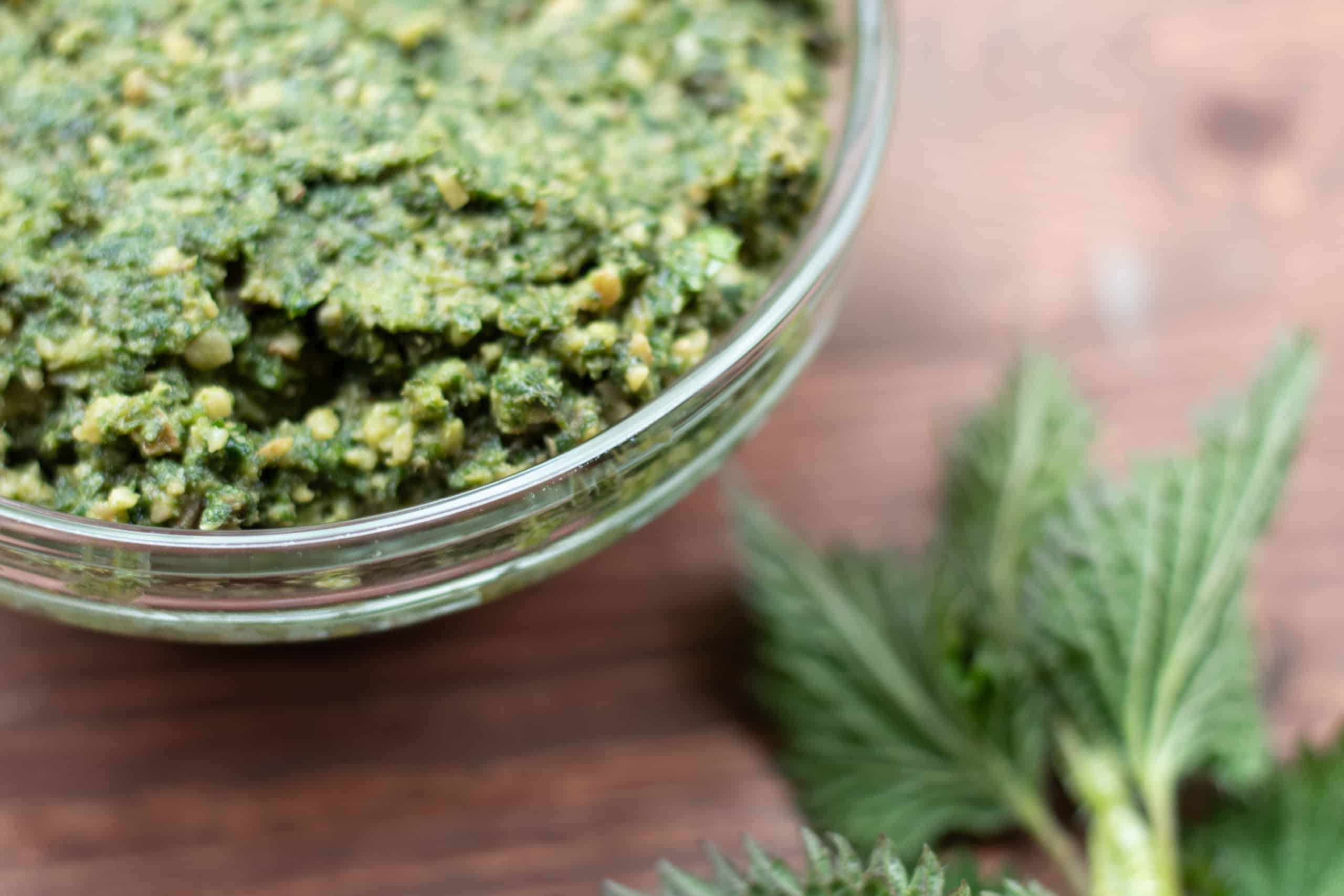
Nettle Pesto
Last Updated on May 29, 2023 by Heather Reseck
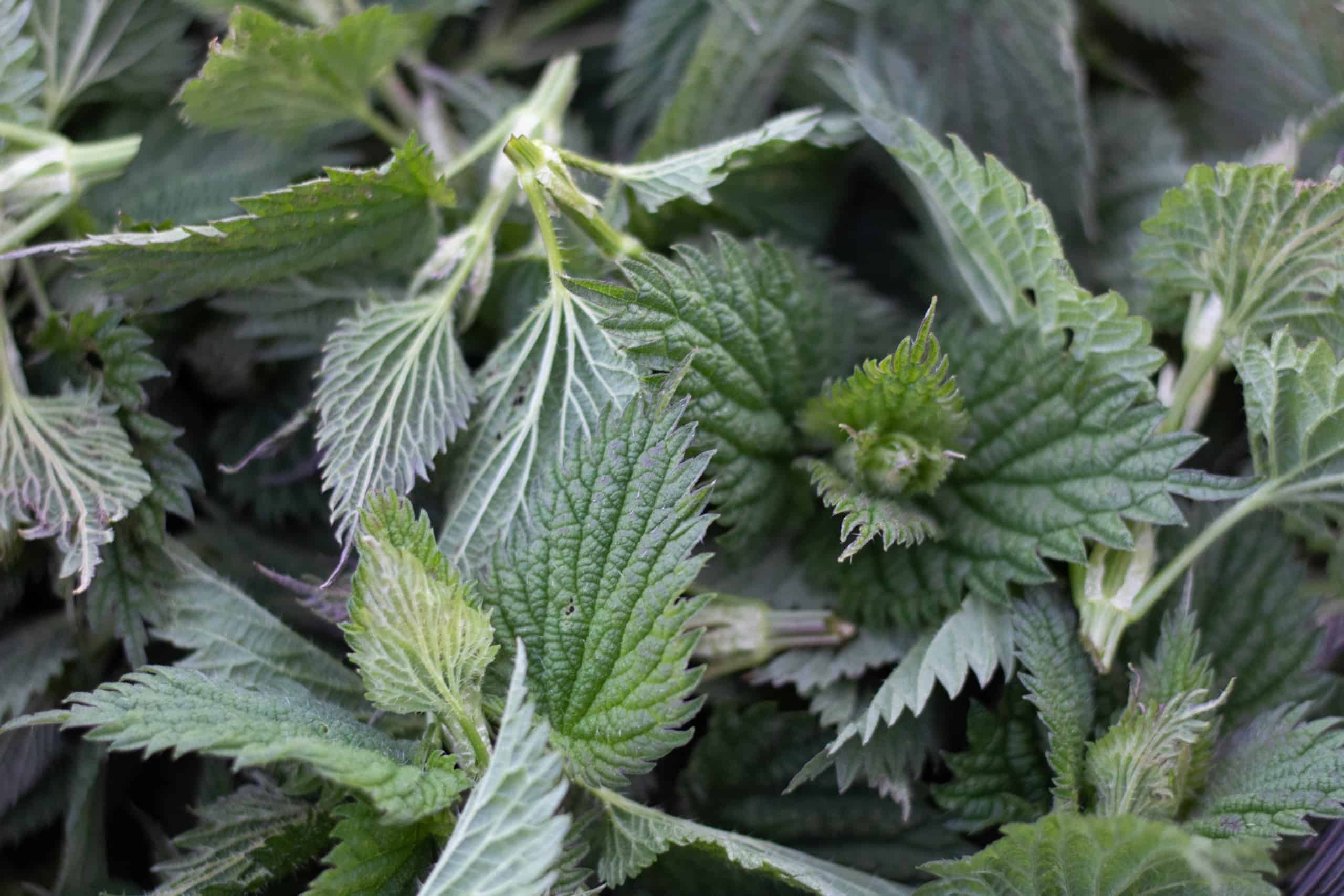
Today is Earth Day so it’s a perfect time to focus on nettles, a foraged superfood that you may have overlooked.
If you’ve never eaten nettles before, I recommend this vegan nettle pesto as the place to start your tastebuds on a foraging journey.
If you have access to a nettle patch, what do you have to lose? I think you’ll be pleasantly surprised…especially if you wear gloves and keep an open mind!
The benefits of nettles
Nettles are nutrition powerhouses–high in vitamin A, C, K, iron, calcium, and magnesium, plus many other minerals. Nettles also offer anti-inflammatory and cleansing properties.
As a bonus, foraged nettles are free and naturally organic.
Will nettles sting my mouth?
If you happen to brush against the stinging hairs on a nettle plant, you will feel the stinging sensation for hours or even a day. However, those delicate stinging hairs wilt easily so they disappear when the leaves are dried, crushed, or cooked. You don’t need to worry about stinging your tongue.
Where can I find nettles?
Nettles grow all over North America and Europe. They are especially abundant in areas that get more rain. That’s why we have so many growing on our property. We live in the Pacific North Wet! (Also known as the Pacific Northwest.)
In the spring, nettles are also available in farmers markets and grocery stores that feature local produce.
What can I do with nettles?
You can add nettles to green smoothies, soup, pizza, lasagna–basically anywhere you would use spinach or other leafy greens. They are good as a side dish, simply cooked with minced garlic and seasoned with salt. Drizzle with a little extra-virgin olive oil if you’d like. Or bake the leaves at 300 degrees for 10-15 minutes to crisp them up and turn them into nettle chips.
You can dry them on a baking sheet at room temperature for a day or two and use them for tea at any time of year. Some people find that nettle tea helps their seasonal allergies.
Especially when raw nettles have distinctive earthy green notes.
How to harvest nettles
Wear gloves, long sleeves, and long pants. Look for young plants that are less than one foot tall. Use kitchen scissors to snip off the top 4 to 6 inches and drop into a bucket or bag.
Use tongs or gloves to transfer the nettles to a colander. Rinse and drain well before using.
12 ways to use vegan nettle pesto
- Tossed with pasta–thin with pasta cooking water
- On vegan pizza
- With polenta
- As a dip for fresh vegetables–especially good with cucumbers
- With zucchini “noodles”—raw or cooked
- On a sandwich with tomato, avocado, and arugula
- As a salad dressing–thin with water or mayonnaise
- In pasta salad
- In lasagna or calzones
- As a garnish for vegetable soup or minestrone
- In a vegetable wrap
- Stirred into vegan mayonnaise to make pesto mayonnaise
How to make pesto with other greens and herbs
Substitute other greens and herbs for the nettles and/or spinach: basil, parsley, mint, arugula, cilantro, carrot tops, etc. This is a good way to use up herbs and greens.
Nettle Pesto
Ingredients
- ½ cup walnuts
- 1 compacted cup nettles 1½ ounces
- 1 cup fresh spinach tightly packed (1½ ounces)
- 2 tablespoons extra-virgin olive oil
- 2 cloves garlic minced
- 1 teaspoon lemon juice
- Scant ½ teaspoon salt
Instructions
- Heat oven to 300°F. Rinse nettles in a colander and let drain. Place walnuts on a rimmed baking sheet. Bake until lightly toasted and fragrant, about 12-15 minutes.
- Shake the colander to remove excess water from the nettles.
- Process nettles, spinach, olive oil, garlic, lemon juice, salt, and walnuts in a food processor until finely chopped but some texture remains, stopping once to scrape down the sides.
- Thin with water as needed. Makes about 1 cup.
- Refrigerate up to 1 week or freeze up to 3 months.


Why would you bake the nettles, duh.